Circular Jobs and Skills Report – Part 1(2025) and Part 2 (2026)
The Victorian Government is planning for a sustainable future by identifying the jobs and skills that will be needed for Victoria’s circular economy.
We have published 2 instalments of this research:
- Part 1 – Circular Jobs and Skills: Planning for our Future (published December 2025)
- Part 2 – Circular Jobs and Skills: A Workforce in Motion (published May 2026).
Part 2 expands on the analysis in Circular Jobs and Skills: Planning for our Future and includes a more comprehensive picture of current circular employment in Victoria, including a detailed quantification of circular jobs.
Combined, the two reports provide the most detailed overview of Victoria’s circular workforce developed to date.
The modelling in part 2 will enable tracking of Victoria’s circular workforce over time, reflecting both industry trends and the efficacy of circular policy and programs.
Part 2 also provides information on where investment might yield the best results based on the circular employment characteristics of individual sectors.
Download the report
Planning for our future
The purpose of this research is to make sure Victorian workers are well-placed to reap the rewards of our transition to a circular economy, in which we maximise the value of resources to cut pollution and waste, and regenerate our natural systems.
A circular economy is about more than waste reduction. Our research shows that transitioning to a circular economy will involve a wide range of activities, sectors, jobs and capabilities.
Our findings indicate that circular jobs will not replace existing jobs. They will offer new opportunities for both highly educated and lower-skilled workers. These jobs will attract higher salaries on average.
Four things to know
-
The research finds that what is needed in Victoria’s circular economy right now is different to what our workforce should look like in our future, ideal circular economy.
In-demand in Victoria’s current circular economy (based on 'Part 2 – Circular Jobs and Skills: A Workforce in Motion')
- Road and rail drivers
- Other clerical and administrative workers
- Office managers and program administrators
- Automotive and engineering trades workers
- Design, engineering, science and transport professionals
- Business, human resource and marketing professionals
- Specialist managers.
In demand in our future circular economy (based on 'Part 1 – Circular Jobs and Skills: Planning for our Future')
- Design, engineering, science and transport professionals
- Automotive and engineering trades workers
- Technicians and trades workers
- Specialist managers
- Electrotechnology and telecommunications trades workers
- Business, human resource and marketing professionals.
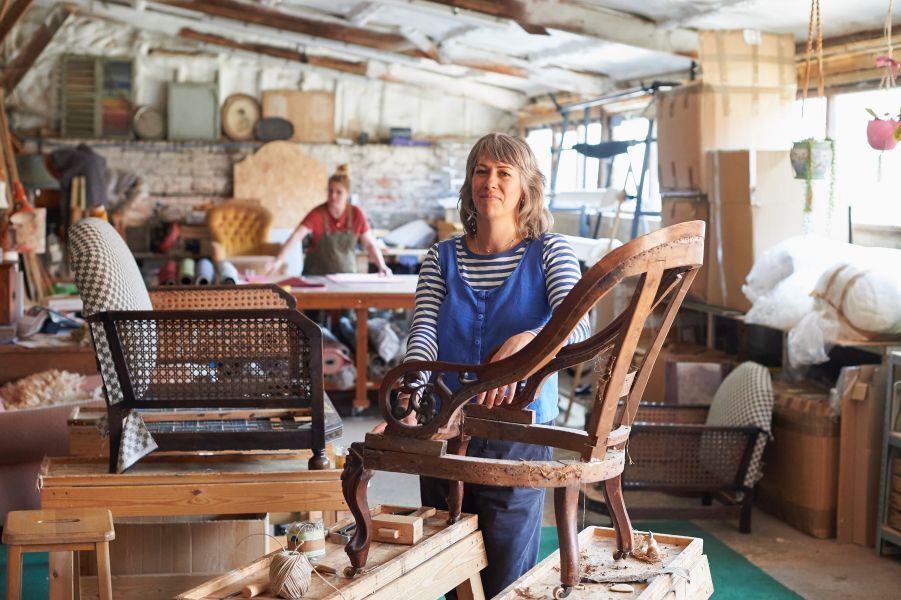
Interestingly, the analysis reveals a number of historical, artisanal jobs will be in demand, especially those focused on stretching the lifespan of the items we use every day. Examples include:
- shoemakers
- dressmakers
- tailors
- boat builders
- canvas goods fabricators
- upholsterers
- mechanics, painters
- musical instrument makers and repairers.
-
Some jobs will need to evolve to become circular jobs, but this will provide opportunities for economic growth.
Transitioning to a circular economy means we can boost materials and labour productivity. This will increase average wages for Victorians and strengthen Victoria’s competitive advantage.
There will be opportunity for all types of workers. The research indicates that the circular economy transition could benefit a range of occupations, from physical labour and manual jobs to highly educated, professional roles.
We know, for example, that we will need workers who can make sure the materials flowing through our economy are managed in a sustainable way – people who can fix and repair physical things, or sort and recycle them, like manufacturers and repairers. This becomes the backbone of our future circular economy.
The graph below shows that, on average, wages paid for ideal, future circular jobs will be higher than the rest of the economy, particularly in select income brackets.
View full-screenAnnual income of jobs in VictoriaHeading spacerIdeal, future jobs in Victoria Current circular jobs in Victoria All jobs in Victoria More than $156k 8.8 8.5 7.8 Between $104k and $156k 16.5 16.0 12.0 Between $52k and $104k 43.5 48.5 40.8 Less than $52k 31.1 27.0 39.3 Annual income of jobs in VictoriaHeading spacerIdeal, future jobs in Victoria Current circular jobs in Victoria All jobs in Victoria More than $156k 8.8 8.5 7.8 Between $104k and $156k 16.5 16.0 12.0 Between $52k and $104k 43.5 48.5 40.8 Less than $52k 31.1 27.0 39.3 -
Circular jobs do not necessarily compete with jobs in the rest of the economy. There is no evidence in this analysis that suggests that individual occupations will change or disappear. Instead, existing occupations might need to become active in different parts of the economy, to ensure they contribute to circular outcomes.
This is especially true where occupations can contribute to circularity as easily as they can contribute to non-circular solutions.
For example:
- an architect could design a circular building or a non-circular building
- an educator could teach about circular solutions or non-circular solutions
- a truck driver could transport circular materials or non-circular materials.
The objective is for existing occupations to work on circular solutions, instead of being replaced by new, circular jobs.
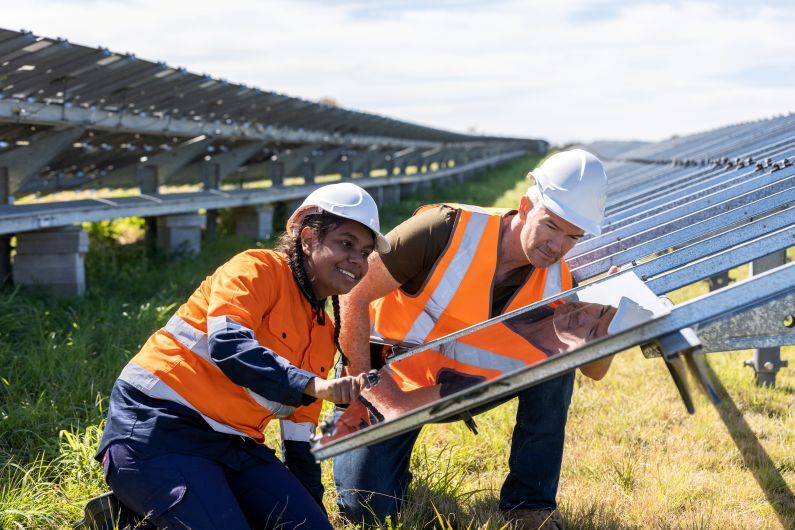
We know that our workforce already has the skills and capabilities required. Now it’s making sure that the right people and skills are applied to the right solutions. For example, in the energy industry, we need electricians to start working in renewables and on solar panels rather than coal-fired power plants.
Likewise, we already have skilled manufacturers and repairers. They will become more important in our future circular economy and will shift to work extending the lifespan of goods as opposed to just manufacturing them to be used once and disposed of.
-
While our current workforce is prepared for a circular economy in some areas, there is work to do.
Based on the updated findings from part 2, we’re prepared in 3 of the 8 key areas we need to address to make the transition to a circular economy.
What we’re well prepared to do
Stretch the lifespan
This means keeping things in use through repair and maintenance. It would include jobs like panel beaters, mechanics and car detailers.
Incorporate digital technology
This means improving access to data and ensuring we have transparency of information across supply chains. It would include jobs like ICT professionals and telecommunication technicians.
Collaborate to build joint value
This means fostering collaboration and increasing transparency across supply chains.
We need a more educated and skilled workforce in this part of our future circular economy in to build connections where they don’t exist yet. These roles will be the connectors that pull the various siloed parts of our circular economy together.
This could include:
- communications professionals
- transition brokers
- facilitators
- human resources
- employment and administrative services
- liaison and counselling professionals
- procurement specialists.
What we’re less prepared to do
Use waste as a resource
This means getting the most value out of resources through recycling and waste management.
It includes current jobs like waste plant and machinery operators. In the future our ideal workforce would include more assessment and administrative staff, as well as technicians capable of managing specialised recycling equipment.
Prioritise regenerative resources
This means sustainable and effective use of resources that are renewable and/or regenerate. For example, through regenerative agriculture and the use of renewable energy.
Victoria’s current circular workforce relies heavily on specialised technicians and engineers working in the renewable energy sector. In an ideal circular workforce, we would see a larger number of vocationally trained workers also active in infrastructure installation and management, as well as regenerative agriculture.
Design for the future
This means we're able to design circular solutions with systems thinking, using the right materials and considering extended use from the start. It would include jobs like engineers, draftspeople, and design professionals.
Rethink business models
This means incentivising the use of alternative, circular business models, like leasing and renting products instead of buying them new.
In our future workforce we’d need more jobs like supply chain managers and analysts, and a large number of logistics and freight handling personnel to support business models that sell products as a service or subscription.
Strengthen and advance knowledge
This means developing and sharing knowledge about circularity. It includes education, but also research, tutoring and media or publishing.
How we analysed the data
The main challenge in supporting a circular workforce lies in the wide variety of work that takes place in a circular economy.
To this end, our holistic framework provides definitions of circular jobs and economic sectors, and the occupations, skills and education required to effectively transition Victoria's workforce to a circular economy.
We conducted the analysis using:
- current National Census data
- Circle Economy’s Key Elements Framework, considered international best practice for identifying circular economic activity
- Australian and New Zealand Standard Industrial Classification (ANZSIC) and Australian and New Zealand Standard Classification of Occupations (ANZSCO), the standardised systems used by the Australian Bureau of Statistics to compile and analyse industry data
- The Australian Skills Classification, developed by Jobs and Skills Australia.
Our research is effectively a translation of Circle Economy's Key Elements Framework into the Australian context and can be used to benchmark all circular economy initiatives.
The methodology’s categorisation of circular sectors and capability profiles will enable the Victorian Government to monitor progress and plan for our future circular workforce.
In Part 2 – Circular Jobs and Skills: A Workforce in Motion, we used a new methodology that adds a quantification of circular employment in Victoria. This quantification uses input-output analysis, a macroeconomic technique based on the interdependencies between industries, allowing the flow of circular goods and services to be linked to employment across the economy.
It is recommended this methodology be used as a standardised, annual process to build a detailed picture of Victoria’s circular progress for evidence-based policymaking.
What's next
This work aims to support policy development, workforce initiatives, and broader economic development programs with evidence of what is required from an effective circular workforce.
It lays the foundations for us to better understand:
- what circular work is
- the opportunities it provides
- how Victorians can make the most out of those opportunities
It is an exciting starting point to develop a workforce that can thrive in our sustainable and circular future.
These two reports represent the culmination of our research into Victoria’s circular workforce. After 30 June 2026, this work will be transferred to the Victorian Skills Authority (VSA) and all enquiries about this research should be directed to vsa.enquiries@ecodev.vic.gov.au
This work supports the Victorian Government’s 10-year Clean Economy Workforce Development Strategy (CEWDS). The insights discussed in this report are already being used to inform several initiatives under this strategy.